



During his latter years in office, Jean Chretien became obsessed with the "legacy" he would leave behind as Prime Minister. As time will tell, he really didn't have to fret. He had been creating a solid and lasting legacy bit by bit as he stumbled along. As the following article points out...
Paul Tuns
National Post, Saturday, December 11, 2004
One year ago tomorrow, the long retirement tour of former prime minister Jean Chretien came to an end as he passed the reins of government to Paul Martin. Enough time has passed that we can now begin a definitive assessment of the mark the man left on the office of prime minister. While many will focus on Shawinigate and Adscam, these episodes are in fact only emblematic of the larger legacy of scandal for which Chretien will be ever identified.
This is not to say Chretien did not produce positive achievements during his three terms in office. After inheriting a massive deficit from Brian Mulroney, he balanced Ottawa's budget and refused to cave in to pressure from the left wing of his party for expensive new programs. In the years after the near-fateful 1995 referendum, he responded forcefully to thwart separatism, championing the Clarity Act.
But these are not the sort of achievements of which a legacy is made. Lester Pearson introduced medicare and created a new model of Canadian internationalism. Pierre Trudeau sought the Just Society and gave the nation the Charter of Rights and Freedoms and the Official Languages Act. In his final years in office, Chretien groped around for something comparable -- embracing same-sex marriage, Kyoto and marijuana reform, for instance, and advancing efforts to fight poverty and disease in Africa. But none of these initiatives enjoys broad Canadian support, and few of us identify them closely with Chretien in any case.
In fact, the true -- though unintended -- legacy left by Chretien is financial scandal, his repeated misuse of power and the centralization of power.
The Chretien government squandered or misspent billions of dollars on pet projects such as the gun registry and the gross mismanagement of funds paid through Human Resources Development Canada. Perhaps the most serious financial scandal of Chretien's tenure was the one exposed after he left office when Auditor-General Sheila Fraser criticized the "outrageous" and possibly criminal misuse of taxpayer money in the Adscam sponsorship scandal.
Chretien often used his office to protect his hold on power, or to assist friends and associates. To insulate the government from criticism, the Prime Minister's Office interfered with what should have been independent investigations -- including the inquiry into the Defence Department's handling of military misdeeds in Somalia, and the RCMP's examination of the treatment of protesters at the 1997 APEC summit.
Sometimes the prime minister's actions seemed to be motivated by more personal considerations. Most notably, Chretien used his prerogatives to deny a peerage to Conrad Black, whose newspapers vigorously pursued the Shawinigate scandal.
But more scandalous than the occasional misuse of power was the fact that he systematically hogged it, centralizing control in the PMO. More than any broken promise, Cabinet misdeed or spending misappropriation, the reduction of not just backbench MPs but most of Cabinet to the status of bystanders, is the worst element of Chretien's legacy.
Donald Savoie noted in his 1999 book Governing from the Centre that the phenomenon of power accruing to a small coterie of close advisors began with Pierre Trudeau and continued with Mulroney. But Chretien's PMO went further -- taking near absolute control of the political agenda, including the powers once exercised by Cabinet members. In 2002, the environment minister heard about Ottawa committing to the Kyoto Protocol at the same time as the rest of Canada and through the same means -- the media. It was a sad reflection of the power of the PMO that ministers were left out of the loop on decisions made by their boss even when those choices directly affected their portfolios.
Furthermore, the PMO made crucial decisions about Cabinet ministers' senior staff and vetted the activities of the Co-ordinating Group of Ministers, a small committee of key Cabinet members who oversaw the major policy initiatives of government.
Consolidating power in the PMO allowed Chretien to rule his caucus and government with an iron fist. Instead of engaging Parliament and the public in policy debates, the PMO made decisions based on pure political opportunism. The chief consideration was seldom what was best for Canada, but what was best for its boss.
With all his power, Chretien did little to advance any particular agenda. According to his sympathetic biographer Lawrence Martin, Chretien had never been an ideas man. He was more a manager than a visionary, and always wanted to be the prime minister more than he wanted to do anything once he held the job.
Perhaps we should consider ourselves fortunate. Given the tight-fisted hold he had on every element of government, Chretien could have easily done great damage to this country through some pet social-engineering project or radical wealth-redistribution scheme. That he instead dedicated himself to nothing more ambitious than the near-dictatorial control of a caretaker government can only be seen as a blessing.
Paul Tuns is the author of Jean Chretien: A Legacy of Scandal (Freedom Press Canada Inc.).
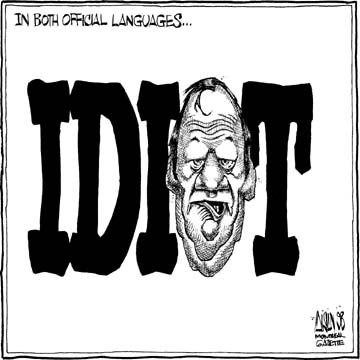
A legacy of scandalIn fact, the true -- though unintended -- legacy left by Chretien is financial scandal, his repeated misuse of power and the centralization of power.
Paul Tuns
National Post, Saturday, December 11, 2004
One year ago tomorrow, the long retirement tour of former prime minister Jean Chretien came to an end as he passed the reins of government to Paul Martin. Enough time has passed that we can now begin a definitive assessment of the mark the man left on the office of prime minister. While many will focus on Shawinigate and Adscam, these episodes are in fact only emblematic of the larger legacy of scandal for which Chretien will be ever identified.
This is not to say Chretien did not produce positive achievements during his three terms in office. After inheriting a massive deficit from Brian Mulroney, he balanced Ottawa's budget and refused to cave in to pressure from the left wing of his party for expensive new programs. In the years after the near-fateful 1995 referendum, he responded forcefully to thwart separatism, championing the Clarity Act.
But these are not the sort of achievements of which a legacy is made. Lester Pearson introduced medicare and created a new model of Canadian internationalism. Pierre Trudeau sought the Just Society and gave the nation the Charter of Rights and Freedoms and the Official Languages Act. In his final years in office, Chretien groped around for something comparable -- embracing same-sex marriage, Kyoto and marijuana reform, for instance, and advancing efforts to fight poverty and disease in Africa. But none of these initiatives enjoys broad Canadian support, and few of us identify them closely with Chretien in any case.
In fact, the true -- though unintended -- legacy left by Chretien is financial scandal, his repeated misuse of power and the centralization of power.
The Chretien government squandered or misspent billions of dollars on pet projects such as the gun registry and the gross mismanagement of funds paid through Human Resources Development Canada. Perhaps the most serious financial scandal of Chretien's tenure was the one exposed after he left office when Auditor-General Sheila Fraser criticized the "outrageous" and possibly criminal misuse of taxpayer money in the Adscam sponsorship scandal.
Chretien often used his office to protect his hold on power, or to assist friends and associates. To insulate the government from criticism, the Prime Minister's Office interfered with what should have been independent investigations -- including the inquiry into the Defence Department's handling of military misdeeds in Somalia, and the RCMP's examination of the treatment of protesters at the 1997 APEC summit.
Sometimes the prime minister's actions seemed to be motivated by more personal considerations. Most notably, Chretien used his prerogatives to deny a peerage to Conrad Black, whose newspapers vigorously pursued the Shawinigate scandal.
But more scandalous than the occasional misuse of power was the fact that he systematically hogged it, centralizing control in the PMO. More than any broken promise, Cabinet misdeed or spending misappropriation, the reduction of not just backbench MPs but most of Cabinet to the status of bystanders, is the worst element of Chretien's legacy.
Donald Savoie noted in his 1999 book Governing from the Centre that the phenomenon of power accruing to a small coterie of close advisors began with Pierre Trudeau and continued with Mulroney. But Chretien's PMO went further -- taking near absolute control of the political agenda, including the powers once exercised by Cabinet members. In 2002, the environment minister heard about Ottawa committing to the Kyoto Protocol at the same time as the rest of Canada and through the same means -- the media. It was a sad reflection of the power of the PMO that ministers were left out of the loop on decisions made by their boss even when those choices directly affected their portfolios.
Furthermore, the PMO made crucial decisions about Cabinet ministers' senior staff and vetted the activities of the Co-ordinating Group of Ministers, a small committee of key Cabinet members who oversaw the major policy initiatives of government.
Consolidating power in the PMO allowed Chretien to rule his caucus and government with an iron fist. Instead of engaging Parliament and the public in policy debates, the PMO made decisions based on pure political opportunism. The chief consideration was seldom what was best for Canada, but what was best for its boss.
With all his power, Chretien did little to advance any particular agenda. According to his sympathetic biographer Lawrence Martin, Chretien had never been an ideas man. He was more a manager than a visionary, and always wanted to be the prime minister more than he wanted to do anything once he held the job.
Perhaps we should consider ourselves fortunate. Given the tight-fisted hold he had on every element of government, Chretien could have easily done great damage to this country through some pet social-engineering project or radical wealth-redistribution scheme. That he instead dedicated himself to nothing more ambitious than the near-dictatorial control of a caretaker government can only be seen as a blessing.
Paul Tuns is the author of Jean Chretien: A Legacy of Scandal (Freedom Press Canada Inc.).

